Unit Big Picture
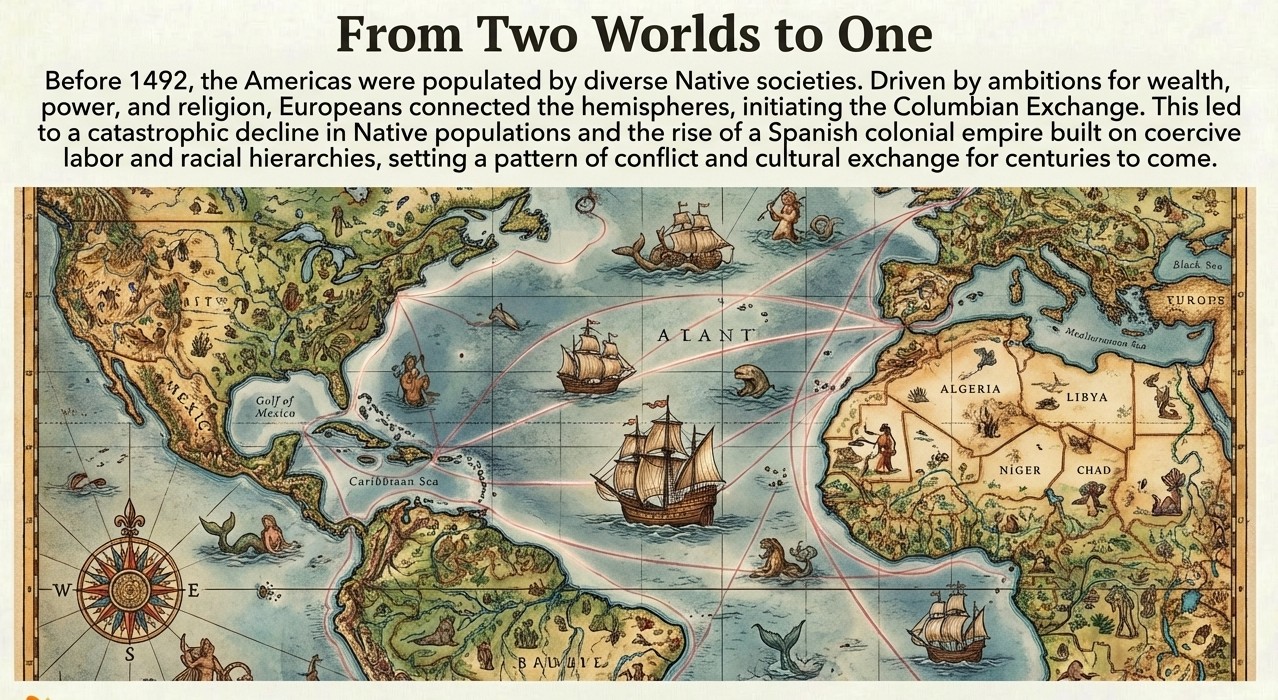
Period 1 explores the Americas before European contact, focusing on the diverse and complex societies developed by Native Americans. It then examines the causes of European exploration and the resulting collision of the Eastern and Western Hemispheres. This encounter initiated the Columbian Exchange, which transformed global ecosystems and societies, and led to the establishment of the Spanish colonial empire, built on coercive labor systems and a rigid racial hierarchy.
Core Threads
Thread 1: Environment & Geography
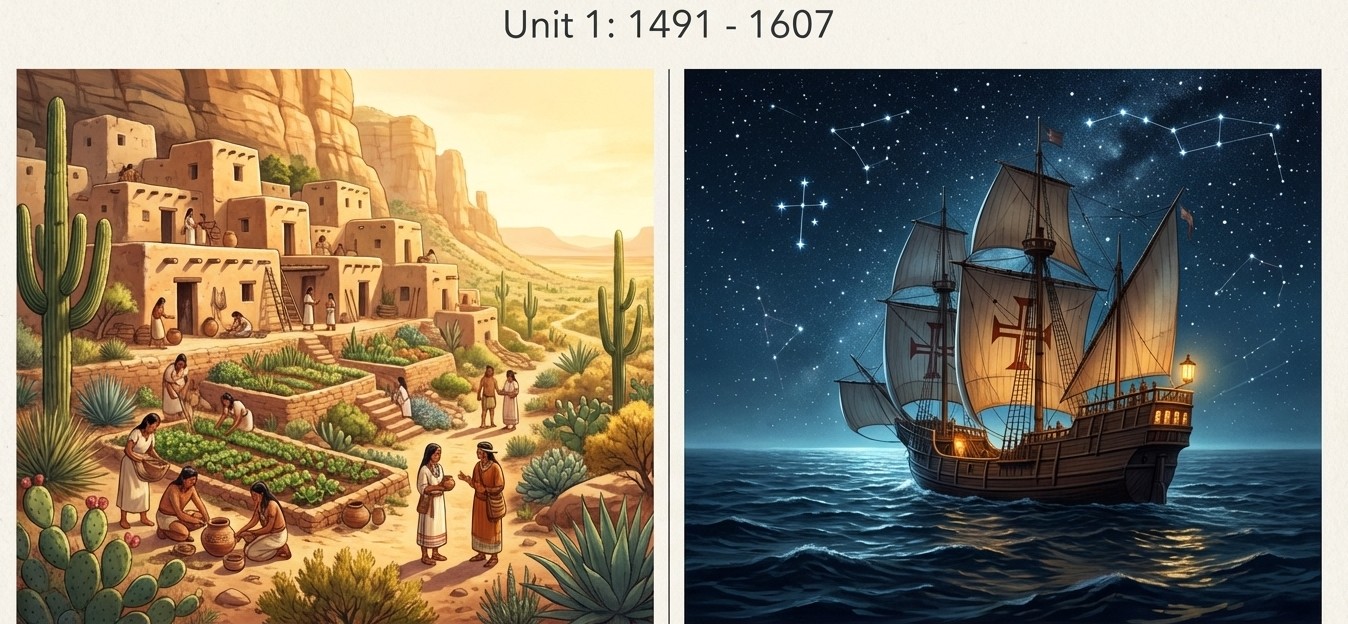
Diverse American environments fostered the development of distinct and varied Native American societies, from settled agricultural communities in the Southwest to mobile hunting groups in the Great Plains.
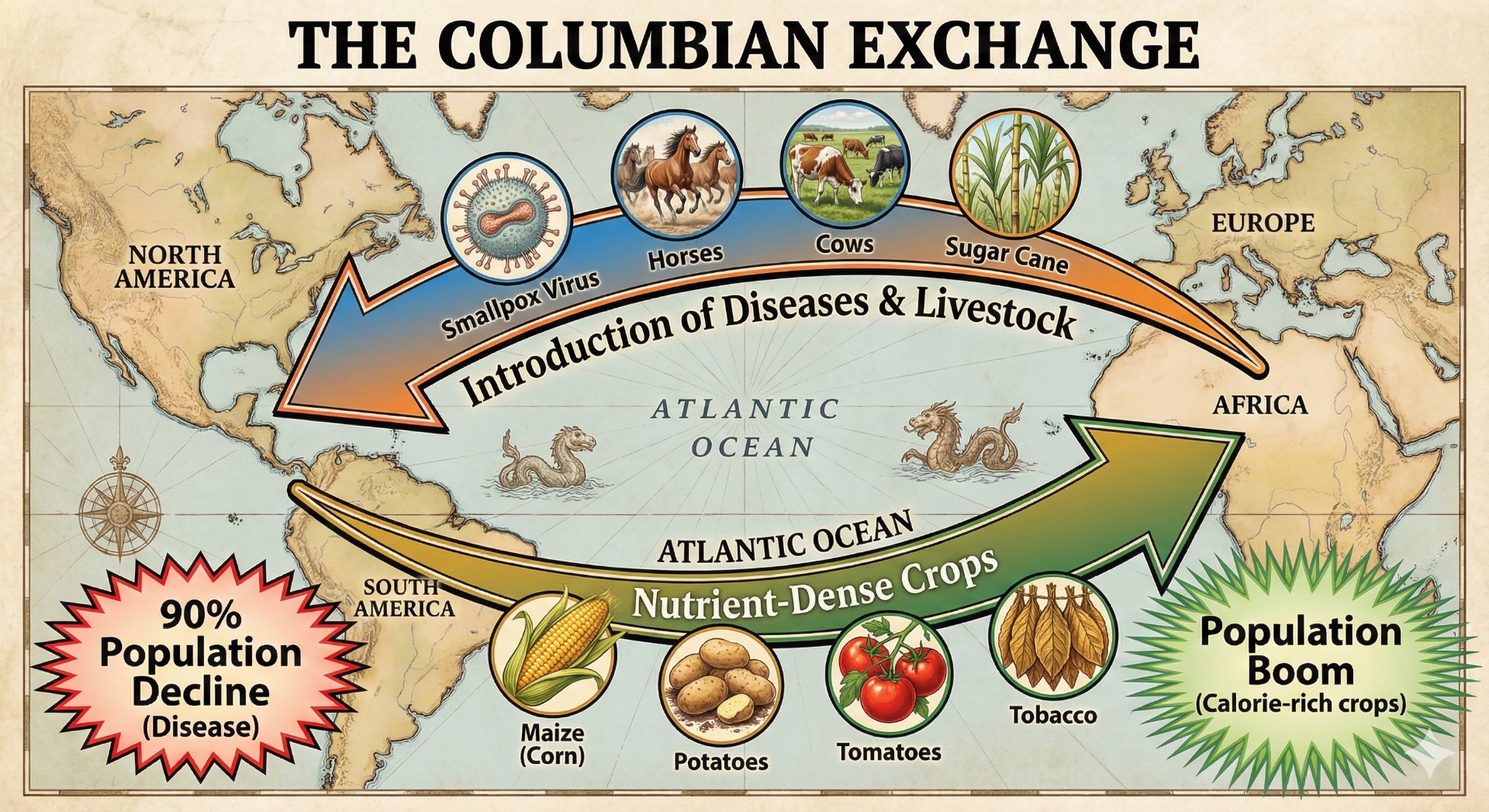
The Columbian Exchange—the transatlantic transfer of plants, animals, and diseases—fundamentally reshaped the environments and economies of both Europe and the Americas, leading to massive demographic changes.
Thread 2: Social Structures & Systems
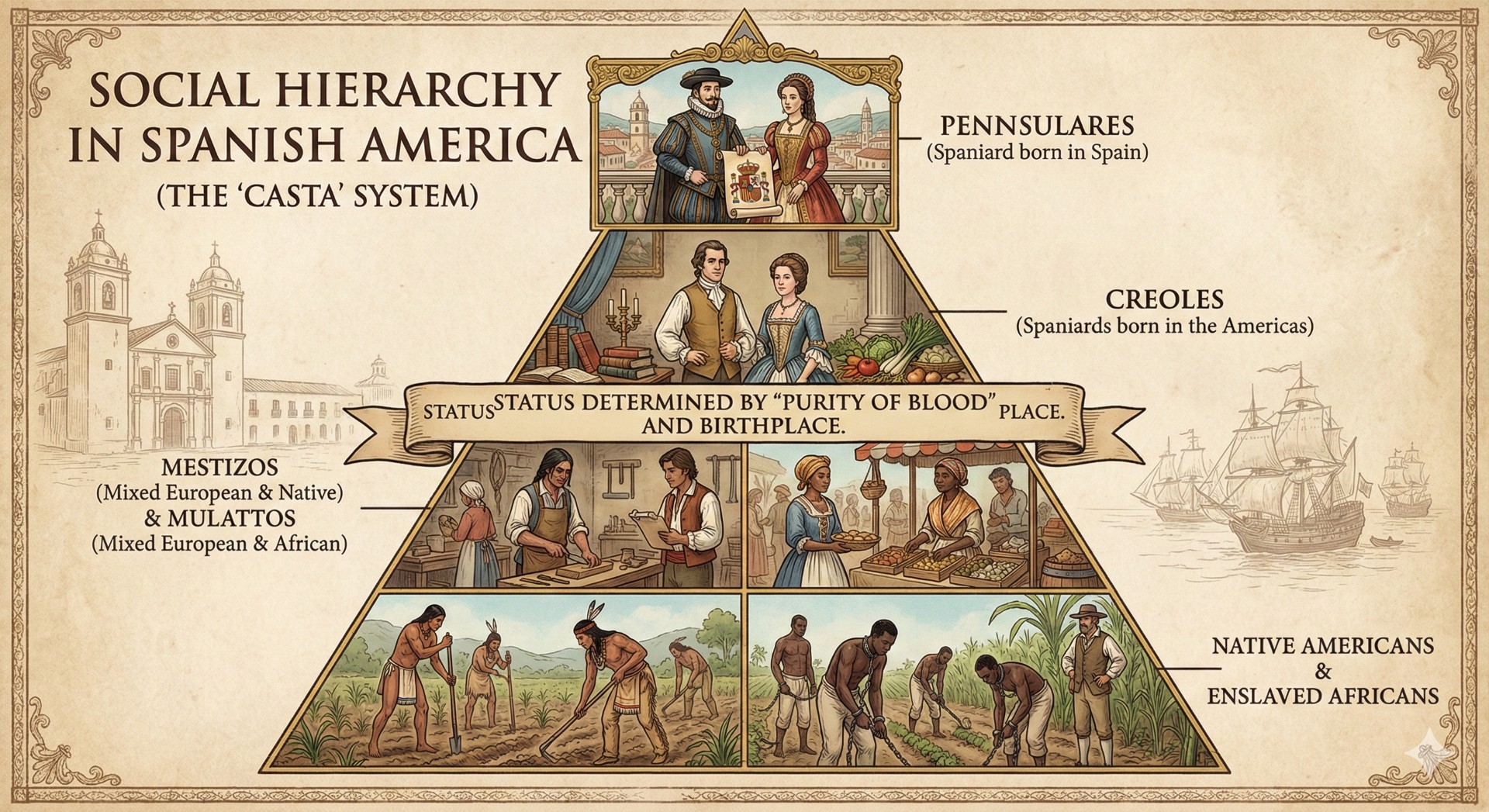
- Spanish colonization imposed new social hierarchies, creating a caste system that categorized people based on their mixed-race heritage to determine their place in society.
- The European demand for resources and labor led to the creation of coercive labor systems, including the encomienda system and the introduction of African slavery.
Timeline (Compact)
| Year | Event |
|---|---|
| c. 1491 | Pre-Columbian American societies exist in their most complex state. |
| 1492 | Christopher Columbus makes his first voyage, initiating sustained contact. |
| 1512 | Spain issues the Laws of Burgos to regulate native labor. |
| 1521 | Hernán Cortés completes the conquest of the Aztec Empire. |
| 1542 | Spain's New Laws are passed, attempting to reform the encomienda system. |
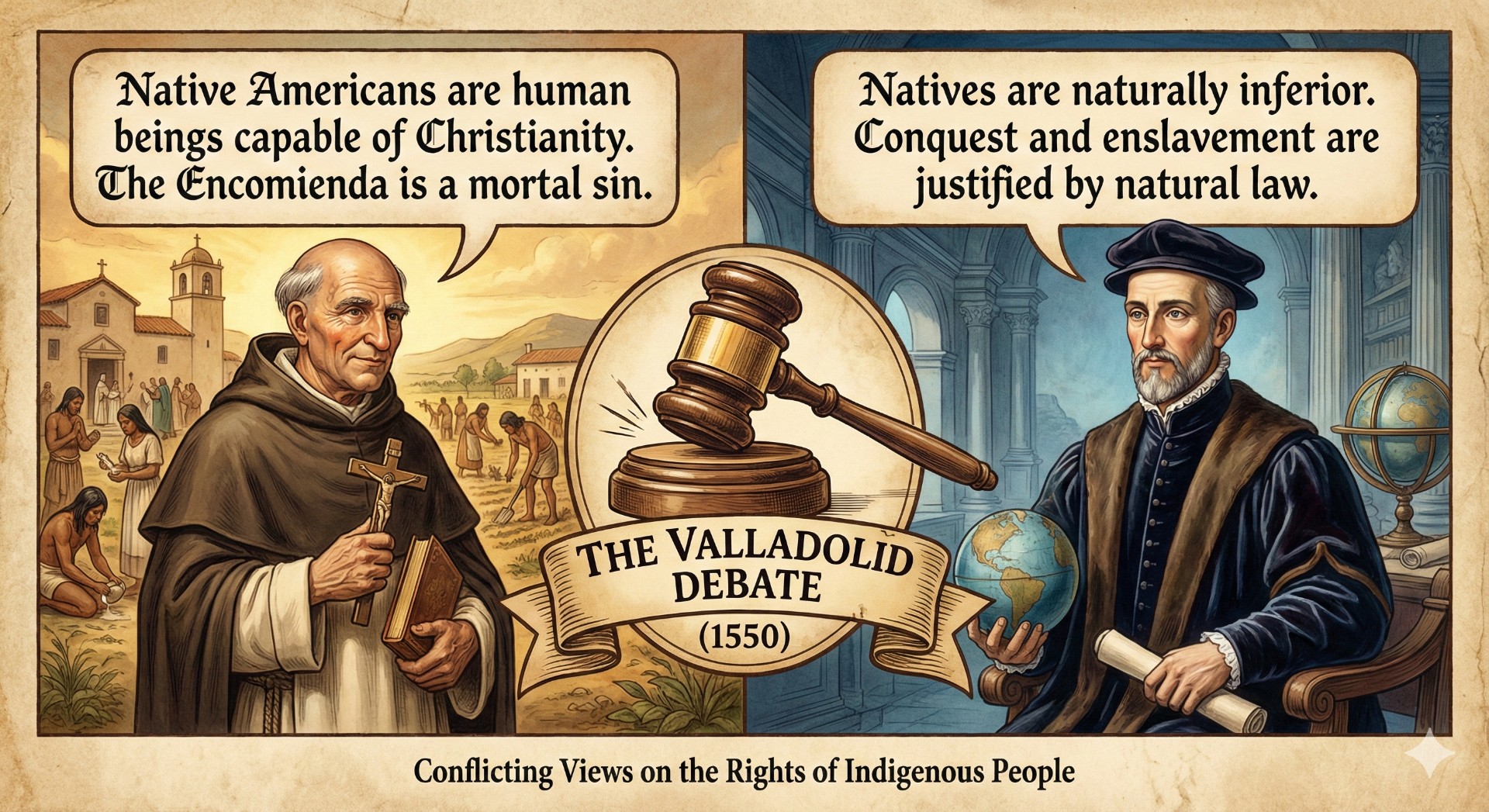
| 1550 | The Valladolid Debate regarding the moral status of Native Americans begins. |
| 1565 | The Spanish establish the first permanent European settlement at St. Augustine. |
Turning Points
| Trigger (Precondition) | Event (Year) | Why It Mattered |
|---|---|---|
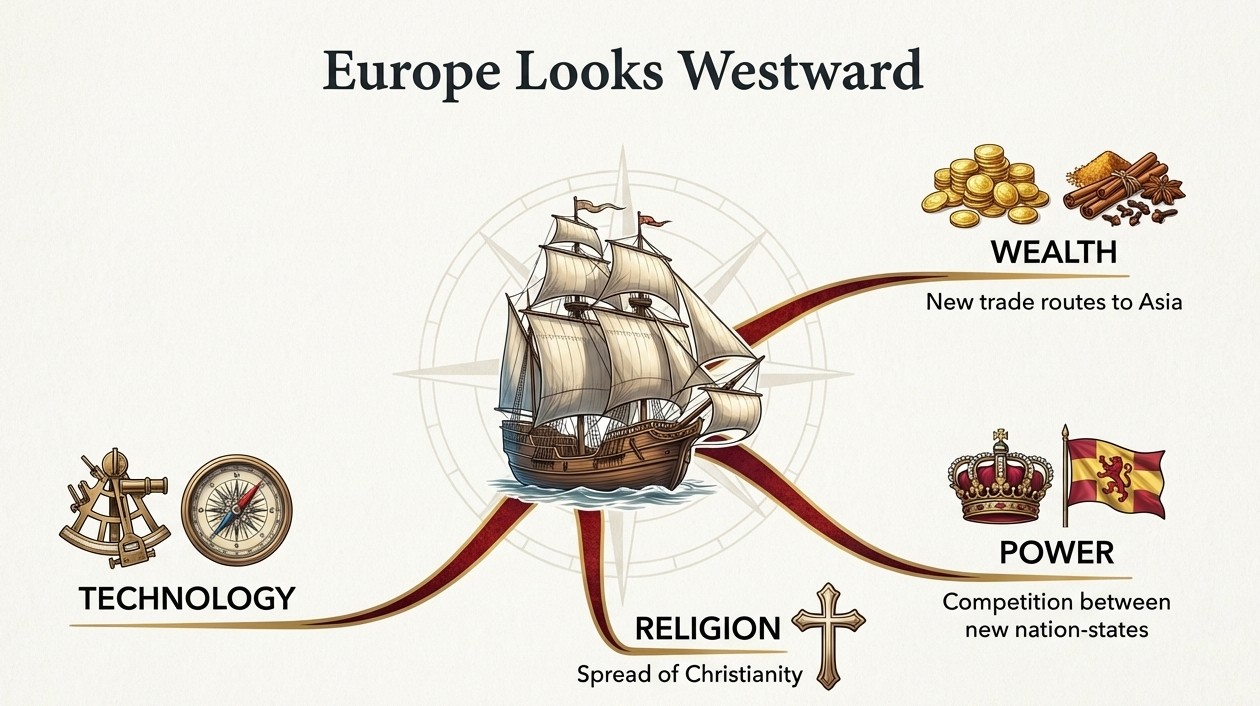
| New maritime technology and a desire for new trade routes to Asia. | Columbus's First Voyage (1492) | Initiated sustained interaction between the Eastern and Western Hemispheres. |
| Sustained transatlantic voyages and European economic ambitions. | The Columbian Exchange (post-1492) | Caused massive ecological change and demographic catastrophe for Native Americans. |
| Spanish desire for wealth and the spread of Christianity. | Spanish Conquest of the Americas (est. 1521) | Established a model for European colonization based on resource extraction and forced labor. |
Unit Evidence Bank
Maize Cultivation: The growing of corn, a staple crop that spread from Mexico northward. It supported economic development, settlement, and the growth of large-scale, organized societies like the Aztecs and Pueblos.
Great Plains Societies: Native American groups in the central part of North America who developed largely mobile, hunter-gatherer lifestyles in response to the region's arid grasslands.
Sextant: A navigational instrument that measured latitude. This and other technological advancements, like the caravel ship, enabled Europeans to undertake long-range oceanic exploration.
Encomienda System: A Spanish labor system that granted conquerors the right to the labor of specific groups of Native Americans. It was a form of coercive labor disguised as a system for protection and Christianization.
Caste System (Sistema de Castas): A social hierarchy established by the Spanish in the Americas that organized society based on racial ancestry. It placed Europeans at the top and Africans and Native Americans at the bottom.
African Slavery: A system of chattel slavery in which Africans were forcibly transported to the Americas to perform labor, particularly on plantations. Europeans developed this system in partnership with some West African trading groups.
Bartolomé de las Casas: A Spanish priest and former encomendero who became a vocal critic of the brutal treatment of Native Americans and advocated for their humanity and rights.
Juan de Sepúlveda: A Spanish scholar who argued during the Valladolid Debate that Native Americans were inherently inferior and that their enslavement and conquest by the Spanish was justified.
Topic Navigator
| Topic Title | What This Adds (≤10 words) |
|---|---|
| 1.1: Contextualizing Period 1 | Setting the stage for the Americas, Europe, and Africa. |
| 1.2: Native American Societies Before European Contact | Exploring the diversity of pre-contact American societies. |
| 1.3: European Exploration in the Americas | Analyzing the motives and means of European exploration. |
| 1.4: Columbian Exchange, Spanish Exploration, and Conquest | Examining the effects of contact, conquest, and exchange. |
| 1.5: Labor, Slavery, and Caste in the Spanish Colonial System | Understanding the new social and labor systems created. |
| 1.6: Cultural Interactions Between Europeans, Native Americans, and Africans | Debating justifications for and responses to colonization. |
| 1.7: Causation in Period 1 | Connecting the causes and effects that defined the era. |
Exam Skills Focus
Causation: European motivations for exploration (wealth, power, religion) caused the conquest of the Americas and dramatic demographic shifts.
Comparison: Compare the social and economic structures of settled, agricultural Native American societies with those of mobile, hunter-gatherer societies.
CCOT: From 1491 to 1607, American societies were transformed by European colonization, though many Native groups retained cultural autonomy through adaptation and resistance.
Common Misconceptions & Clarifications
Misconception: The Americas were a sparsely populated wilderness before 1492.
Clarification: The Americas were home to millions of people living in complex and diverse societies, from large urban centers to mobile hunter-gatherer bands.
Misconception: All Native American groups were the same.
Clarification: Native American societies were incredibly diverse, with distinct languages, cultures, and economic systems shaped by their unique environments.
Misconception: Europeans conquered Native Americans primarily due to superior technology.
Clarification: While technology was a factor, the most significant European advantage was the spread of diseases like smallpox, which devastated Native populations who had no immunity.
One-Paragraph Summary
Before 1492, the Americas were populated by a wide array of Native American societies whose cultures were shaped by their diverse environments. Driven by ambitions for wealth, military power, and the spread of Christianity, European nations launched voyages of exploration that connected the Eastern and Western Hemispheres for the first time. This contact initiated the Columbian Exchange, a process that transformed global ecosystems and led to a catastrophic decline in Native American populations from epidemic diseases. The Spanish established a vast colonial empire, imposing new social hierarchies like the caste system and exploiting native labor through the encomienda system, setting a pattern of conflict and cultural exchange that would define the centuries to come.