
AP U.S. History Flashcards: Contextualizing Period 1
Written by AP Content Team, Verified for 2026 AP Exams, Last updated: August 2026
Review key ideas with interactive flashcards. This set includes 16 cards to help you master important concepts.
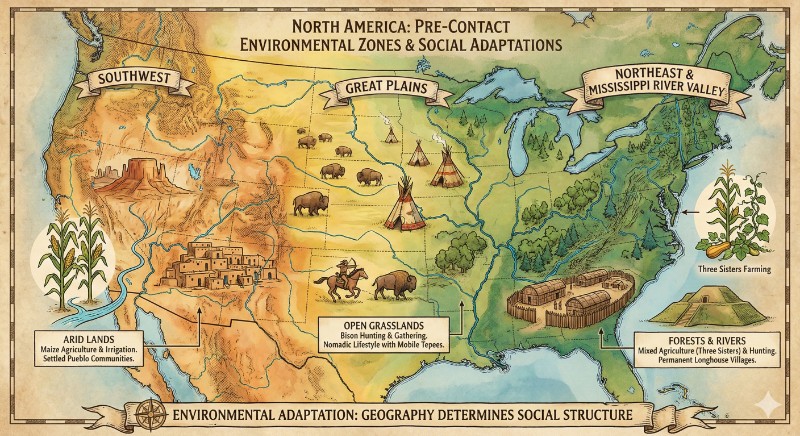
Through what specific means did different native societies adapt to their environments?
Different native societies adapted to and transformed their environments through innovations in agriculture, resource use, and social structure.
Card 1 of 16
All Flashcards (16)
Through what specific means did different native societies adapt to their environments?
Different native societies adapted to and transformed their environments through innovations in agriculture, resource use, and social structure.
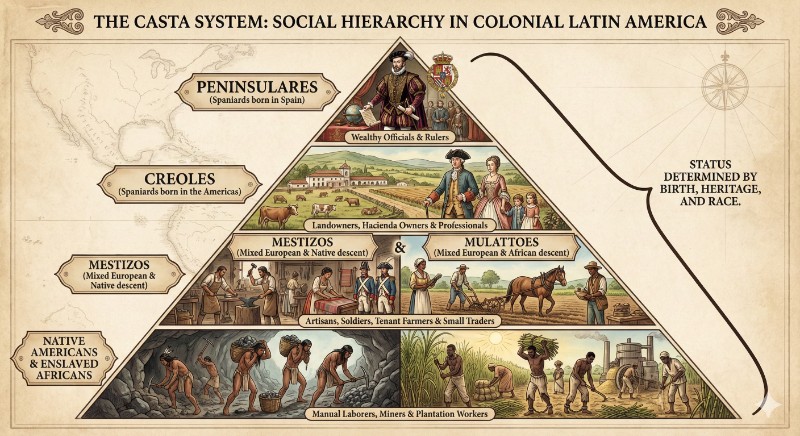
What were the three main spheres of change caused by the Spanish Empire and Columbian Exchange?
The three main spheres of change were demographic, economic, and social.
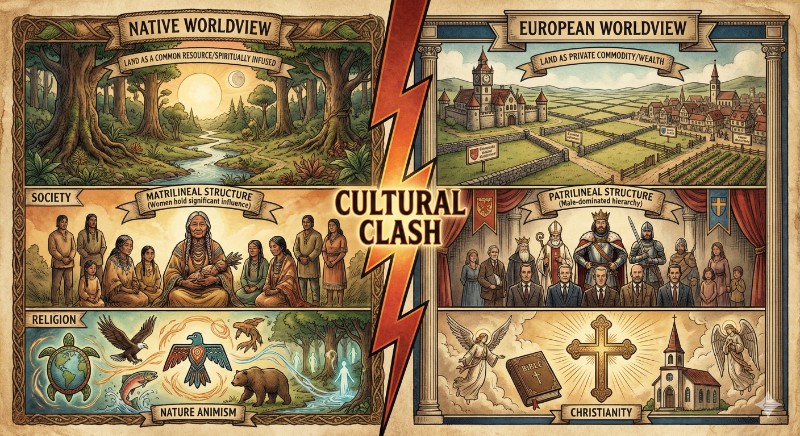
Identify three key areas where European and Native American worldviews clashed.
Europeans and Native Americans held clashing worldviews on issues such as land use, religion, and gender roles.
What is the historical time frame for the context of early European encounters in the Americas, prior to major English colonization?
The context for European encounters in the Americas is the period from 1491 to 1607.
How did diverse environments in North America influence native populations before European contact?
As native populations migrated and settled across North America, they developed distinct and complex societies by adapting to and transforming their diverse environments.
How did the development of the Spanish Empire impact the Western Hemisphere?
The development of the Spanish Empire, in conjunction with the Columbian Exchange, caused extensive demographic, economic, and social changes.
What was the relationship between native migration and societal development in pre-contact North America?
The migration and settlement of native populations across the continent was the process through which they developed distinct and complex societies adapted to local environments.
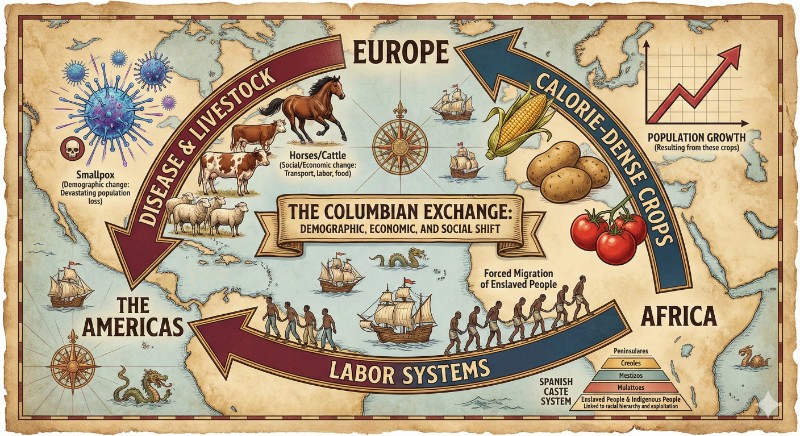
Were the changes from the Columbian Exchange limited to the Americas?
No, contact led to significant social, cultural, and political changes on both sides of the Atlantic Ocean.
What were the major categories of change resulting from the Columbian Exchange and the Spanish Empire?
The Columbian Exchange and the development of the Spanish Empire resulted in extensive demographic, economic, and social changes.
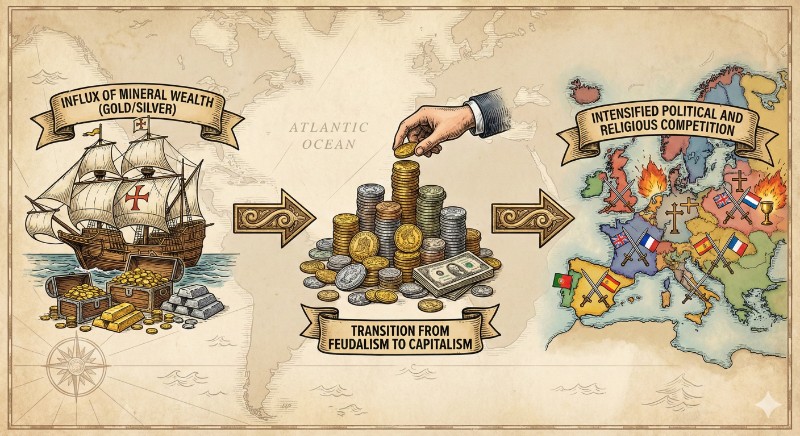
What effect did European expansion into the Western Hemisphere have on Europe itself?
European expansion generated intense social, religious, political, and economic competition and changes within European societies.
What was the Columbian Exchange?
The Columbian Exchange was the process initiated by contact among Europeans, Native Americans, and Africans that led to significant social, cultural, and political changes on both sides of the Atlantic.
What is the fundamental reason for the existence of distinct and complex native societies before 1491?
The development of distinct and complex societies was a result of native populations adapting to and transforming a wide variety of environments across North America.
Define 'divergent worldviews' in the context of European and Native American interactions.
Divergent worldviews refer to the conflicting perspectives Europeans and Native Americans asserted regarding issues such as religion, gender roles, family, land use, and power.
What groups were central to the contact that sparked the Columbian Exchange?
Contact among Europeans, Native Americans, and Africans was the catalyst for the Columbian Exchange and the resulting changes.
How did Native Americans actively shape their surroundings?
Native societies actively transformed their diverse environments through innovations in areas like agriculture and resource use, not just by adapting to them.
What was a major internal consequence for Europe as a result of its expansion into the Americas?
Expansion into the Western Hemisphere fueled intense competition and significant changes within European societies themselves.