
Topic 3.1: Enzyme Structure and Function
🚀 Life in the Fast Lane
Imagine your cells are bustling cities. Every second, trillions of tasks need doing—breaking down fuel, building structures, copying instructions. Collectively, this is metabolism.
But there’s a problem: left to themselves, most of these chemical reactions are way too slow to sustain life. It's like trying to build a skyscraper with a crew that only works one hour a week.
Enter the superheroes of the cell: Enzymes. These specialized proteins speed up these reactions to impossibly fast rates, ensuring the city keeps running smoothly.
🧩 Meeting the Players
Before we look at how they work, let's define what they are.
The Enzyme (The Specialist)
An enzyme is a biological catalyst (usually a protein). "Catalyst" just means it speeds up a reaction without being consumed by it.
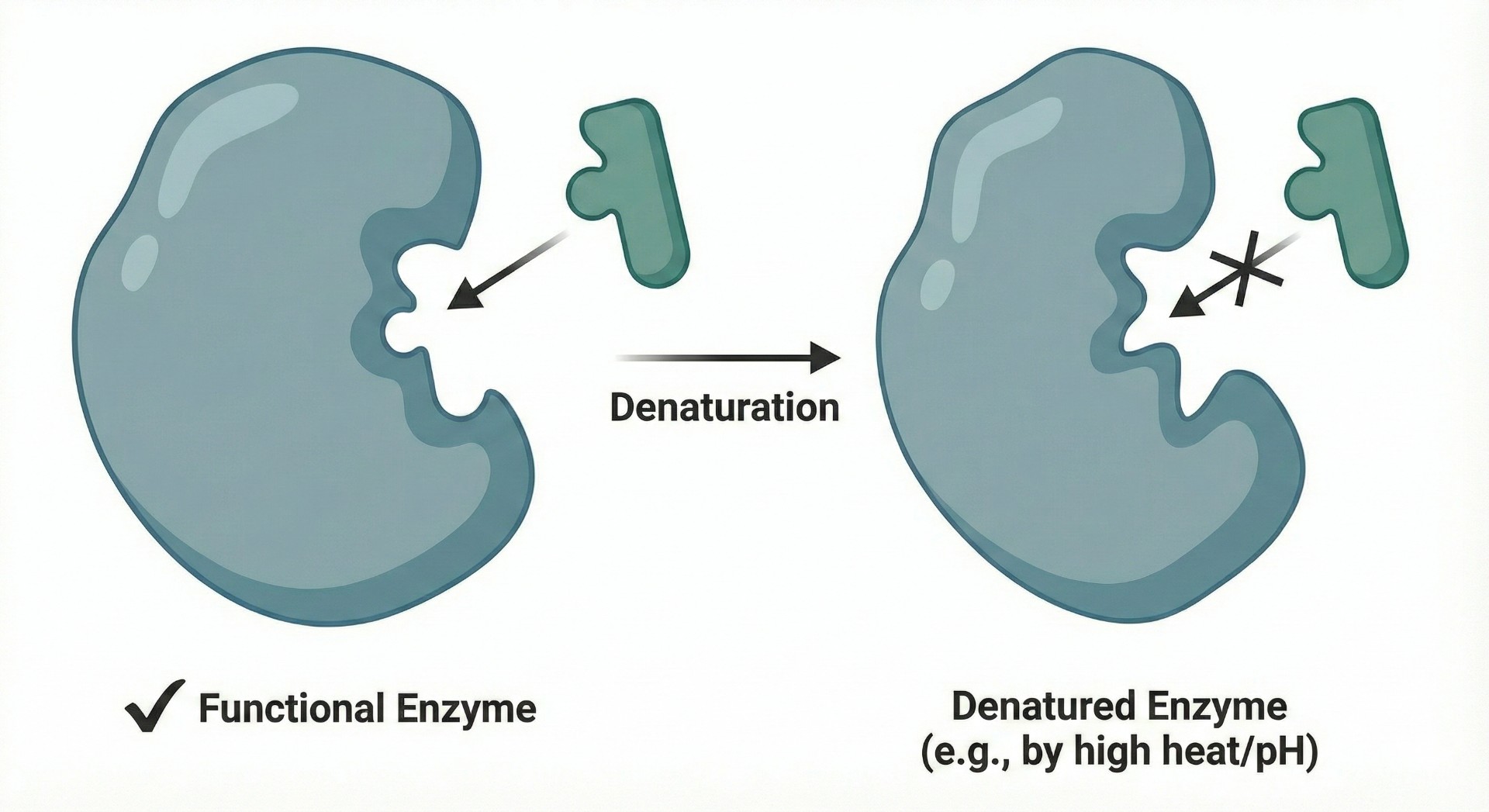
- Key Feature: They have a complex, specific 3D shape. In AP Bio, remember: Structure dictates function. If you mess up the shape, the enzyme stops working.
The Substrate (The Target)
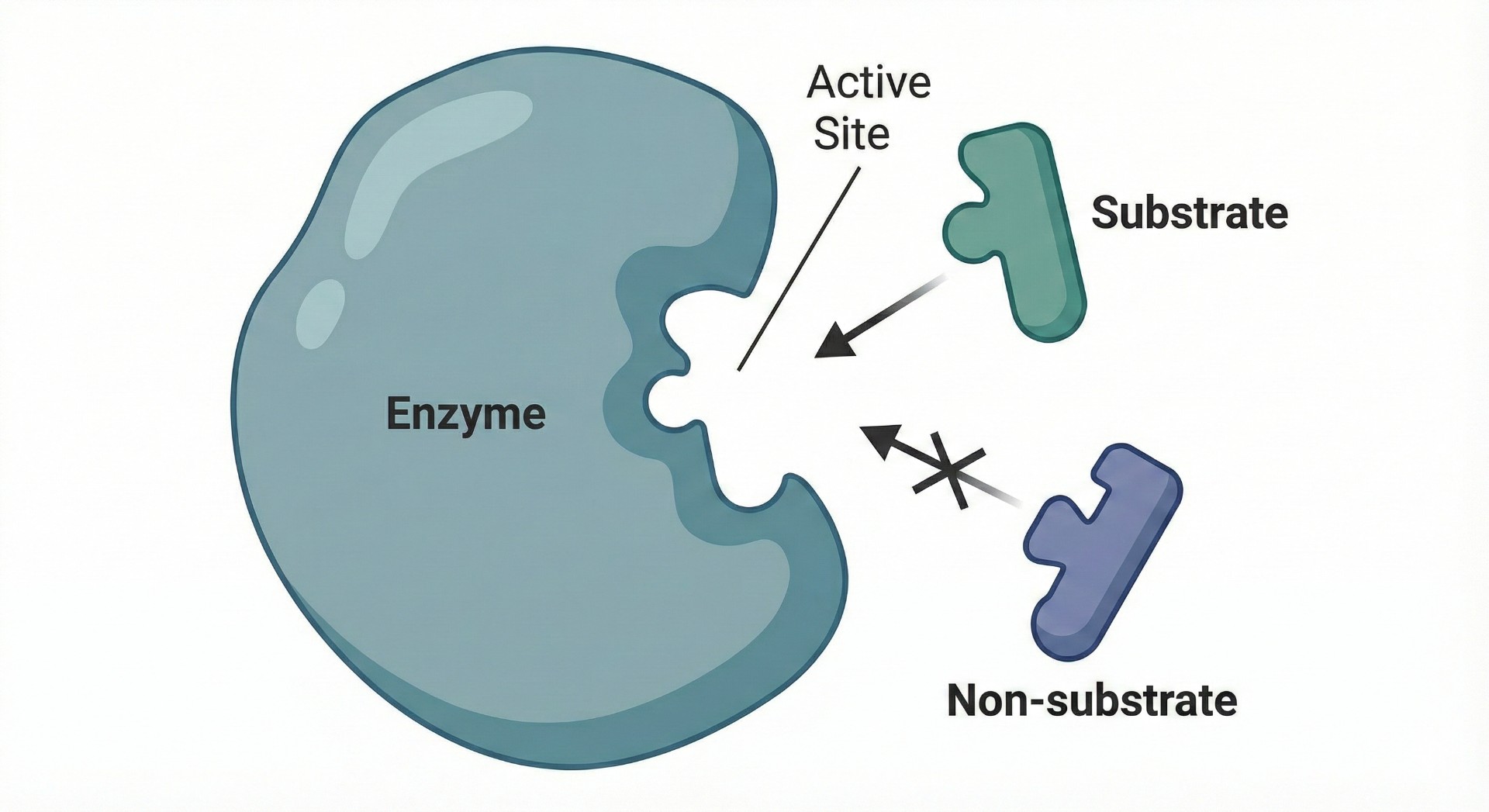
The substrate is the specific molecule that the enzyme is going to act on.
- Because of the enzyme's unique 3D shape, it is highly specific. A protein-digesting enzyme won't touch a carbohydrate.
The Active Site (The "Business End")
This is a specific groove or pocket on the enzyme where the substrate actually fits. The chemical properties (charge, shape, hydrophobicity) here must perfectly match the substrate.
⚙️ The Mechanism: How Enzymes Work
Enzymes don't make impossible reactions happen; they just make possible reactions happen faster. They do this by tackling the energy barrier.
The Challenge: Activation Energy (Ea)
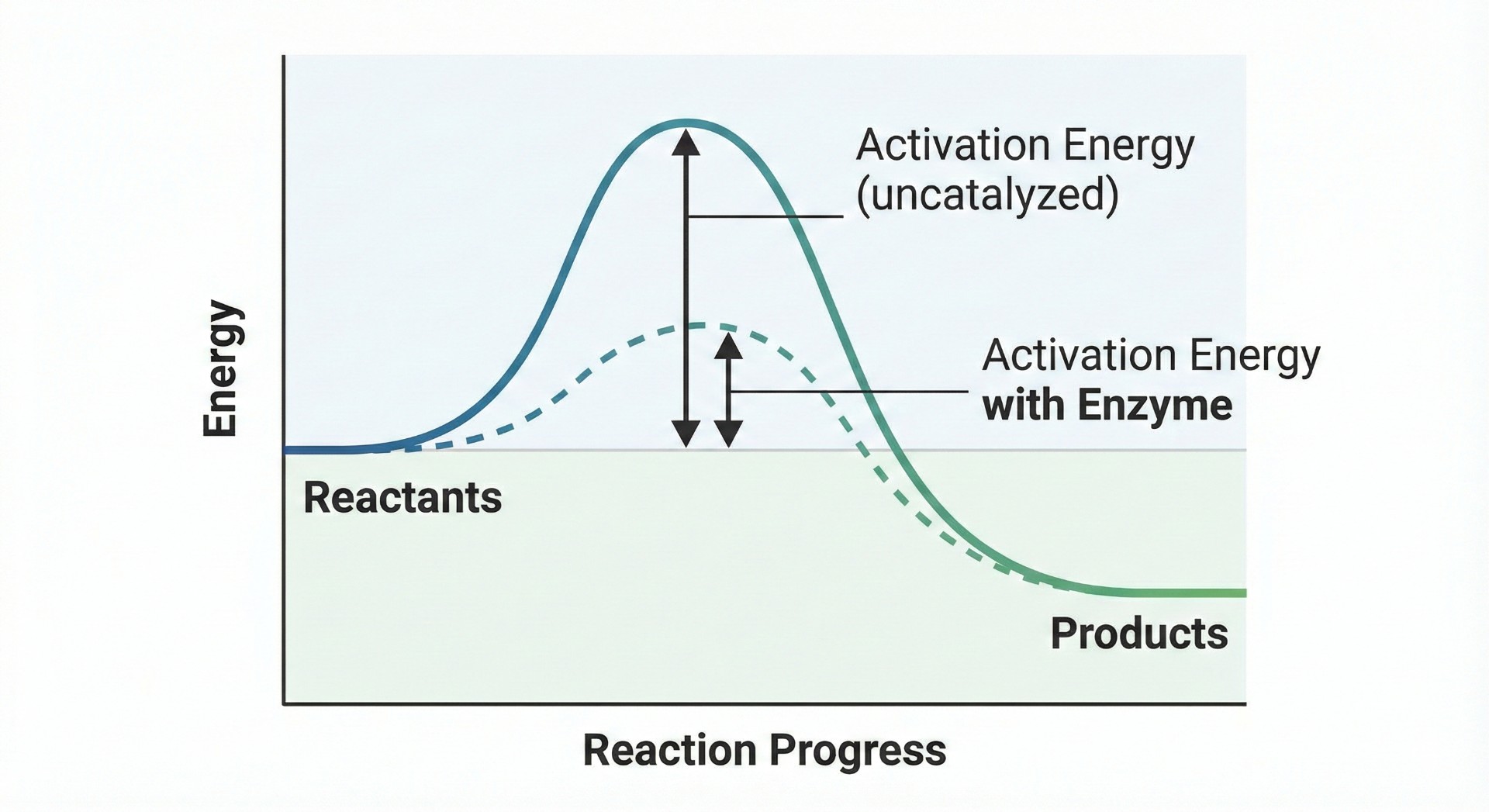
Every chemical reaction needs an initial investment of energy to break existing bonds so new ones can form. This is called Activation Energy (Ea). Think of it like pushing a boulder up a hill before it can roll down the other side.
The Solution: Lowering the Bar
Enzymes grab the substrate and contort it into an unstable state, making the bonds easier to break.
- Crucial Point: Enzymes do not add energy to the reaction. Instead, they lower the amount of activation energy needed. They lower the hill so the boulder rolls over it much faster.
🔄 The Catalytic Cycle (Step-by-Step)
The process of turning a substrate into a product is a repeating loop.
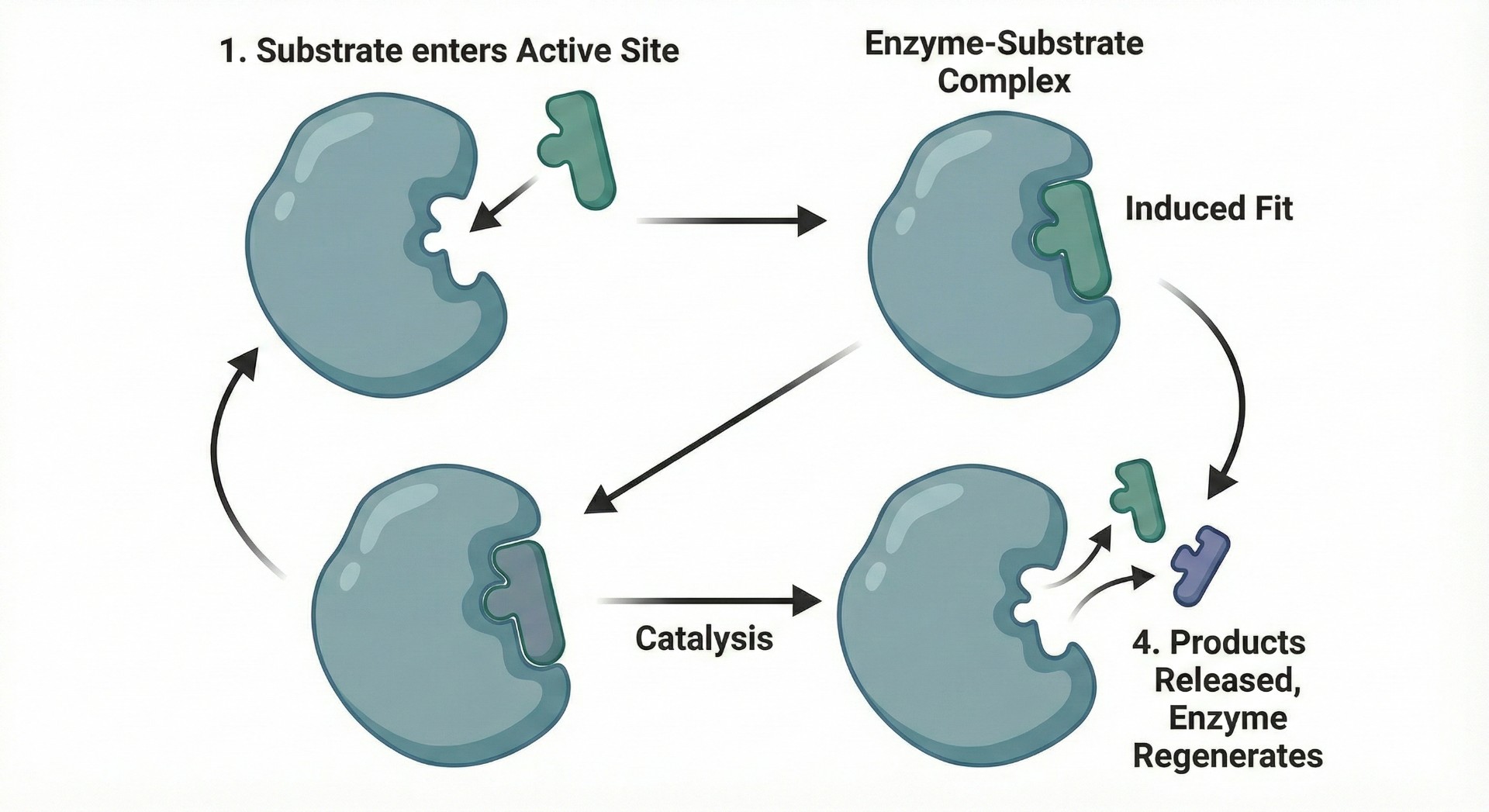
1. The Setup (Binding)
The substrate moves around and collides with the enzyme's active site.
2. The Squeeze (Induced Fit)
Forget the old "lock and key" model where the fit is rigid. The modern view is the Induced Fit Model. As the substrate binds, the enzyme changes its shape slightly to "hug" the substrate tightly.
- AP Analogy: It’s like putting on a latex glove. The glove (enzyme) changes shape slightly to conform perfectly to your hand (substrate).
3. Catalysis (The Reaction)
Held in this tight embrace (the Enzyme-Substrate Complex), the enzyme stresses the substrate's chemical bonds, or creates an ideal microenvironment (like changing local pH), allowing the reaction to occur rapidly. Substrates are turned into products.
4. The Reset (Release & Repeat)
The products have a different shape and no longer fit well in the active site. They are released. The enzyme pops back to its original shape, instantly ready for a new substrate molecule.
🧠 AP Skill Check: Cause and Effect
On the AP exam, you need to predict what happens when things change.
| If you change this (Cause)... | Then this happens (Effect)... |
|---|---|
| An enzyme binds a substrate and performs induced fit. | The activation energy of the reaction is lowered. |
| The activation energy is lowered. | The reaction rate increases dramatically. |
| You alter the enzyme's 3D shape (e.g., extreme heat or pH change). | The active site shape changes, the substrate cannot bind, and function is lost. |
🚫 Myth Busters: Common Misconceptions
Don't get tripped up on these common traps!
MYTH: Enzymes gets used up like fuel in a car.
- FACT: Enzymes are reusable! They emerge from the reaction unchanged and ready to go again.
MYTH: Enzymes provide the energy for a reaction.
- FACT: No way. They just lower the required energy barrier (Ea) to get it started.
MYTH: An enzyme is a rigid lock waiting for a key.
- FACT: It's dynamic! The Induced Fit model means the enzyme actively flexes around the substrate to facilitate the reaction.
📝 Summary
Enzymes are protein catalysts specific to certain substrates. They speed up metabolic reactions necessary for life by lowering activation energy (not by adding energy). They do this by binding to a substrate at the active site, undergoing an induced fit change in shape to facilitate the reaction, and then releasing the products to start the cycle over again.