
AP U.S. History Practice Quiz: Government Policies During the Civil War
Written by AP Content Team, Verified for 2026 AP Exams, Last updated: August 2026
Test your understanding with short quizzes. This quiz has 9 questions to check your progress.
Question 1 of 9
All Questions (9)
A) To abolish slavery throughout the nation
B) To prevent European diplomatic intervention
C) To preserve the Union
D) To fulfill America's founding democratic ideals
Correct Answer: C
The text explicitly states, 'Lincoln began the war to preserve the Union,' identifying this as his initial objective before the war's purpose was reframed.
A) The delivery of the Gettysburg Address
B) The issuance of the Emancipation Proclamation
C) The enlistment of African Americans in the Union Army
D) The effort to reunify the country
Correct Answer: B
The content specifies that 'the Emancipation Proclamation reframed the purpose of the war' from solely preserving the Union to also fighting against slavery.
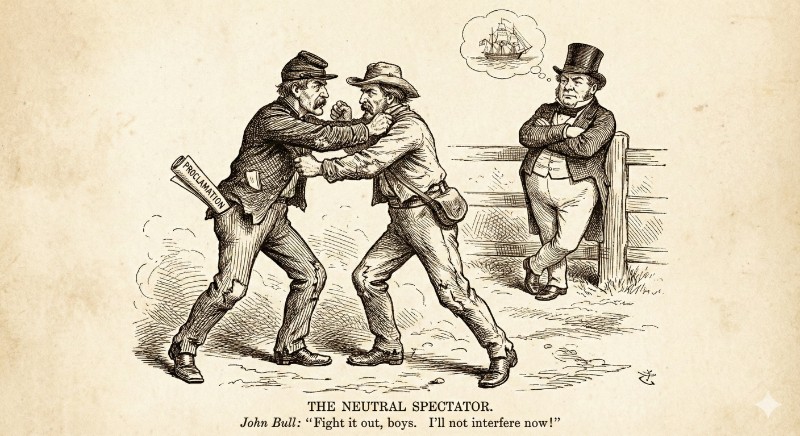
A) secured a formal alliance between the Union and European powers.
B) caused Great Britain to declare war on the Confederacy.
C) helped to discourage European nations from supporting the Confederacy.
D) led to the immediate recognition of the Union's war aims by France.
Correct Answer: C
The text states that the Emancipation Proclamation 'helped prevent Confederate diplomatic support from Europe,' as it made the war a clear struggle against slavery.
A) They were offered land grants in the West.
B) They organized widespread protests in Northern cities.
C) They were recruited for diplomatic missions to Europe.
D) They escaped from plantations and joined the Union military.
Correct Answer: D
The provided content clearly indicates that as the war's purpose shifted, 'Many African Americans fled plantations and enlisted in the Union Army.'
A) By arguing that the Constitution was flawed and needed to be rewritten.
B) By proposing a detailed plan for post-war economic recovery.
C) By connecting the fight against slavery to the nation's core democratic principles.
D) By declaring that preserving the Union was no longer the primary goal.
Correct Answer: C
The text explains that Lincoln 'used speeches like the Gettysburg Address to portray the struggle against slavery as the fulfillment of America’s founding democratic ideals.'
A) His leadership led to a decrease in the power of the federal government.
B) He consistently maintained that the war was only about states' rights.
C) He evolved the nation's purpose from simple reunification to a struggle for democratic and egalitarian ideals.
D) He prioritized foreign policy and diplomatic recognition above all domestic concerns.
Correct Answer: C
The text as a whole shows a progression: Lincoln started the war to preserve the Union but, through actions like the Emancipation Proclamation and speeches like the Gettysburg Address, he reframed the conflict as a fight to fulfill America's founding democratic ideals, thus impacting and elevating those ideals.
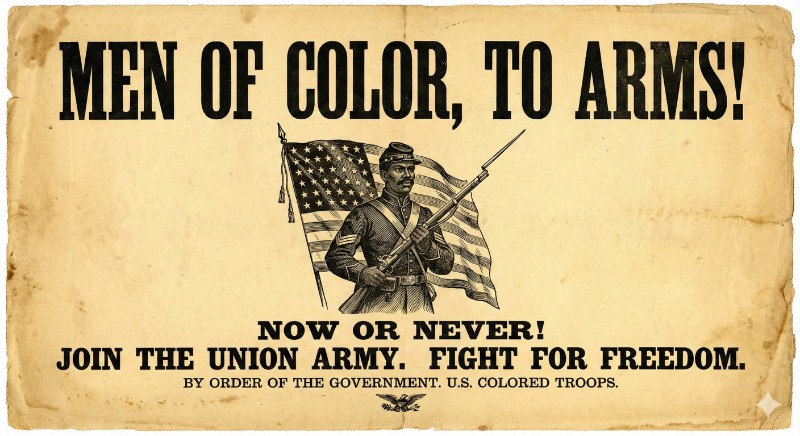
A) forcing the immediate surrender of several Confederate states.
B) providing a new source of soldiers for the Union Army.
C) causing a massive economic collapse in the North.
D) securing financial aid from European banks.
Correct Answer: B
The text links the proclamation to the fact that 'Many African Americans fled plantations and enlisted in the Union Army,' which directly provided more manpower for the Union military.
A) The industrialization of the South
B) The punishment of all Confederate leaders
C) The reunification of the country
D) The expansion of presidential power
Correct Answer: C
The text explicitly mentions that 'Lincoln sought to reunify the country,' framing this as a central goal of his leadership during the war.
A) Lincoln's policies, like the Emancipation Proclamation, were often at odds with his unifying rhetoric.
B) Lincoln used policy changes and powerful speeches to transform the war's meaning and reinforce the nation's founding ideals.
C) Lincoln's rhetoric in the Gettysburg Address was a response to the failure of the Emancipation Proclamation.
D) Lincoln prioritized policy over rhetoric, viewing speeches as secondary to military and diplomatic action.
Correct Answer: B
This option correctly integrates the key points from the text: the Emancipation Proclamation (policy) reframed the war, and the Gettysburg Address (rhetoric) portrayed this new purpose as a fulfillment of America's democratic ideals, showing how both worked together.