
AP U.S. History Practice Quiz: Manifest Destiny
Written by AP Content Team, Verified for 2026 AP Exams, Last updated: August 2026
Test your understanding with short quizzes. This quiz has 11 questions to check your progress.
Question 1 of 11
All Questions (11)
A) The desire to establish industrial factories away from eastern cities.
B) The search for economic opportunities, such as access to mineral resources.
C) A federal government mandate requiring all citizens to consider relocating.
D) The goal of creating military alliances with European powers on the West Coast.
Correct Answer: B
The provided content states that 'The desire for access to natural and mineral resources and the hope for economic opportunities or religious refuge led to an increased migration to and settlement in the West.'
A) Forming a military alliance with Great Britain to secure the northern border.
B) Expanding U.S. territory across the continent to the Pacific Ocean.
C) Ceding western territories back to Native American tribes for peaceful coexistence.
D) Limiting immigration from European countries to preserve American culture.
Correct Answer: B
The text states that advocates argued Manifest Destiny 'compelled the United States to expand its borders westward to the Pacific Ocean.'
A) A series of major gold discoveries in the eastern states.
B) A decline in international trade with Asia.
C) New laws designed to promote transportation and economic growth in the West.
D) A widespread movement for religious separatism in the South.
Correct Answer: C
The content explicitly states, 'Westward migration was boosted during and after the Civil War by new legislation promoting western transportation and economic development.'
A) acquiring colonies in Africa.
B) establishing stronger trade relationships with Asia.
C) preventing Russian expansion into Alaska.
D) creating a defensive alliance with Latin American nations.
Correct Answer: B
The text connects westward expansion to foreign policy by stating, 'U.S. interest in expanding trade led to economic, diplomatic, and cultural initiatives to create more ties with Asia.' Reaching the Pacific coast made this trade more accessible.
A) a period of peaceful cooperation with all neighboring countries.
B) the rapid industrialization of the southern states.
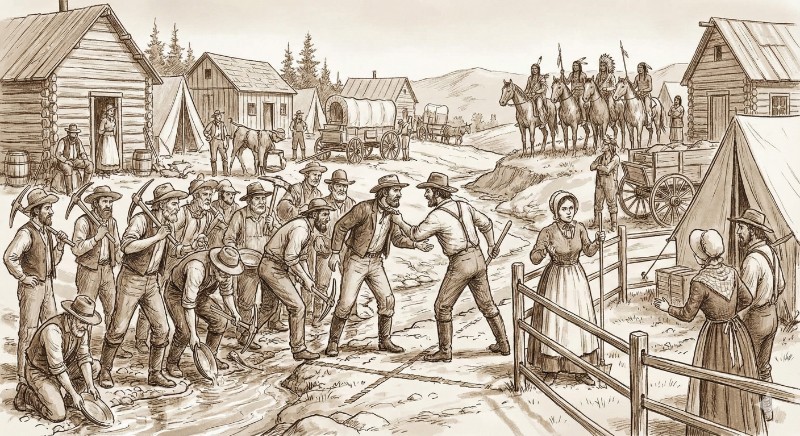
C) increased competition and violent conflict over western lands.
D) a decline in American nationalism and patriotism.
Correct Answer: C
The text clearly indicates that the push westward was 'frequently provoking competition and violent conflict.'
A) the hope of finding a religious refuge.
B) the desire to access natural resources.
C) a federal government policy of urban containment.
D) the search for new economic opportunities.
Correct Answer: C
The text mentions religious refuge, access to resources, and economic opportunities as causes for migration. It does not mention a policy of urban containment.
A) The restriction of trade with Asian nations to protect domestic industries.
B) The passage of legislation to limit the growth of transportation networks.
C) The migration of settlers seeking economic opportunities and resources in the West.
D) The establishment of peaceful, diplomatic relations with all inhabitants of the West.
Correct Answer: C
Manifest Destiny provided the ideological justification for the physical act of westward expansion. The text links the ideology (Point 3) with the motivations for migration, such as seeking economic opportunities (Point 2).
A) before the election of 1844.
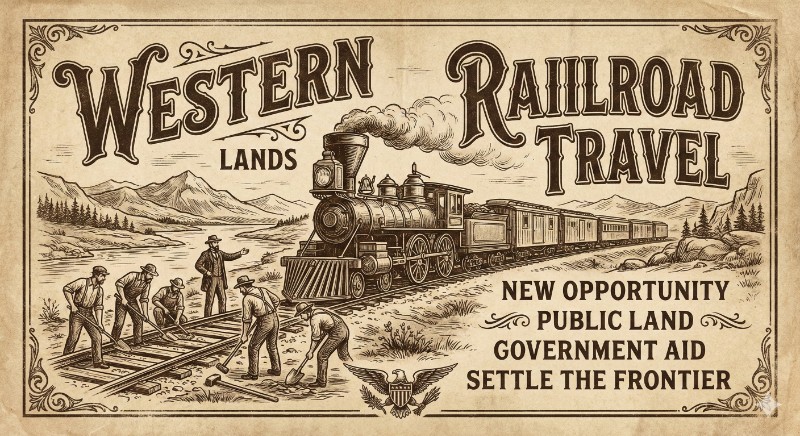
B) during and after the Civil War.
C) in the immediate aftermath of the American Revolution.
D) as a direct response to European colonization efforts.
Correct Answer: B
The text specifies that 'Westward migration was boosted during and after the Civil War by new legislation promoting western transportation and economic development.'
A) The United States should limit its borders to prevent conflict with other nations.
B) The superiority of American institutions justifies the nation's expansion to the Pacific.
C) Economic development should be focused on the established eastern states.
D) Diplomatic ties with Asia are less important than those with Europe.
Correct Answer: B
The text explicitly states that advocates 'argued that Manifest Destiny and the superiority of American institutions compelled the United States to expand its borders westward.'
A) A federal policy aimed at decreasing U.S. population density.
B) The desire of Americans to seek religious freedom and economic opportunities.
C) A military strategy to create a buffer zone against European powers.
D) The decline of agriculture in the American South.
Correct Answer: B
The text identifies 'the hope for economic opportunities or religious refuge' as a key factor that 'led to an increased migration to and settlement in the West.' This directly addresses a cause of the expansion.
A) The containment of British influence in Canada.
B) The creation of new economic and diplomatic ties with Asia.
C) The acquisition of new colonial territories in South America.
D) The establishment of a military blockade of European ports.
Correct Answer: B
The text states, 'U.S. interest in expanding trade led to economic, diplomatic, and cultural initiatives to create more ties with Asia.' Gaining a Pacific coastline was a prerequisite for this interest to become a practical foreign policy initiative.