
AP U.S. History Flashcards: Reconstruction
Written by AP Content Team, Verified for 2026 AP Exams, Last updated: August 2026
Review key ideas with interactive flashcards. This set includes 24 cards to help you master important concepts.
What two factors intensified debates over slavery and other issues, leading to the Civil War?
U.S. expansion and deepening regional divisions intensified the debates over slavery and other economic, cultural, and political issues that led the nation into civil war.
Card 1 of 24
All Flashcards (24)
What two factors intensified debates over slavery and other issues, leading to the Civil War?
U.S. expansion and deepening regional divisions intensified the debates over slavery and other economic, cultural, and political issues that led the nation into civil war.
What was the dominant topic of political discussion in the 1850s?
Debates over slavery came to dominate political discussion in the 1850s.
What were the major effects of the Civil War and Reconstruction on the U.S. government and society?
They ended slavery, altered relationships between the states and the federal government, and led to debates over new definitions of citizenship.
What advantages did the North have over the Confederacy in the Civil War?
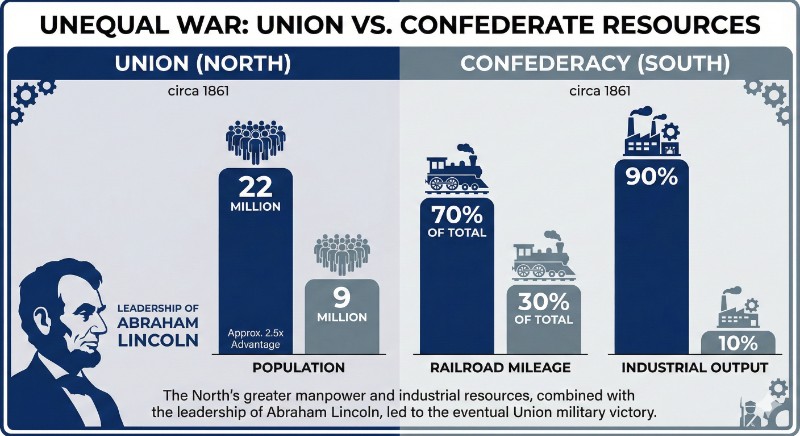
The North had greater manpower and industrial resources, which contributed to its eventual military victory.
What was the ultimate outcome of the nation's intensified debates over expansion and regional divisions?
Intensified by expansion and deepening regional divisions, these debates ultimately led the nation into civil war.
Identify three key factors that led to the Union's military victory.
The North’s greater manpower and industrial resources, the leadership of Abraham Lincoln, and the decision to emancipate enslaved people led to the Union victory.
What forces bolstered the popular enthusiasm for U.S. expansion?
Popular enthusiasm for U.S. expansion was bolstered by economic and security interests.
What was the status of the issue of slavery after the Civil War and Reconstruction?
The Union victory in the Civil War and the contested reconstruction of the South settled the issue of slavery, formally ending it.
How did westward migration relate to U.S. foreign policy in the mid-19th century?
Popular enthusiasm for an expansionist foreign policy resulted in substantial migration westward as the U.S. acquired new territories.
What key social and political questions did Americans debate in the 1840s and 1850s?
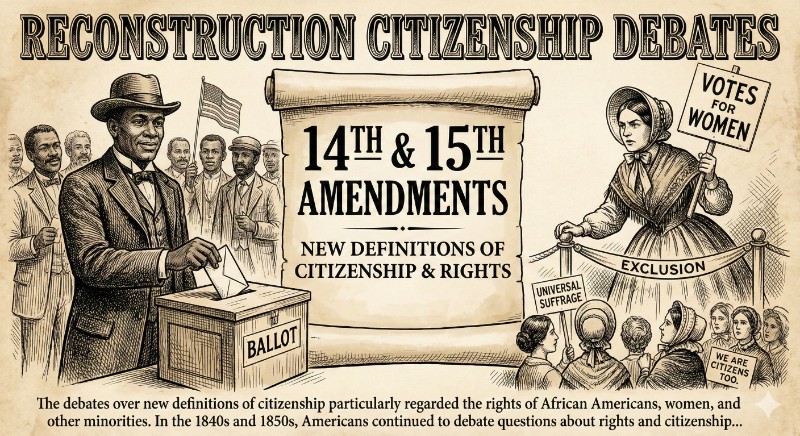
In the 1840s and 1850s, Americans continued to debate questions about rights and citizenship for various groups of U.S. inhabitants.
How did Reconstruction impact the relationship between the states and the federal government?
Reconstruction altered the relationships between the states and the federal government, leaving unresolved many questions about the power of the federal government.
What was the primary context for the sectional conflict that emerged from 1844 to 1877?
The U.S. became more connected with the world, pursued an expansionist foreign policy, and became a destination for many migrants, which intensified debates over slavery and citizenship.
Besides slavery, what other types of issues created deepening regional divisions before the Civil War?
Deepening regional divisions were also caused by debates over other economic, cultural, and political issues.
What two key issues were settled by the Union victory in the Civil War and Reconstruction?
The Union victory and the contested reconstruction of the South settled the issues of slavery and secession.
What two trends characterized the U.S. in the period from 1844 to 1877?
The U.S. pursued an expansionist foreign policy and emerged as the destination for many migrants from other countries.
What were the political consequences of the debates over slavery in the 1850s?
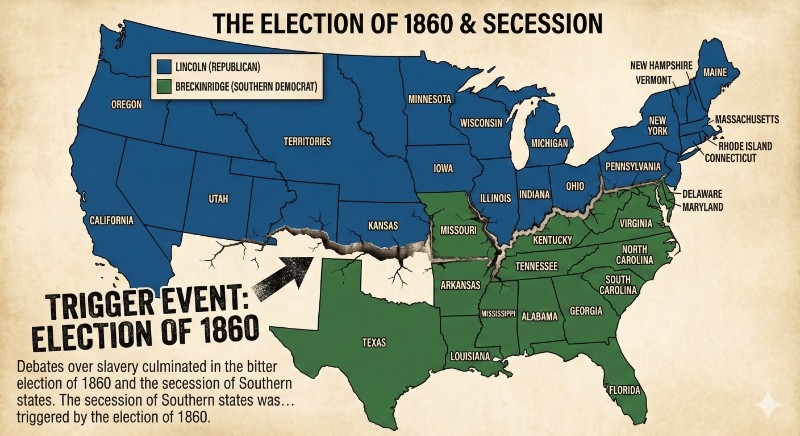
Debates over slavery culminated in the bitter election of 1860 and the secession of Southern states.
Term: Secession (in the context of the 1860s)
The secession of Southern states was the culmination of decades of political debate over slavery, intensified in the 1850s and triggered by the election of 1860.
Define the U.S. foreign policy in the Western Hemisphere during the mid-19th century.
The United States pursued an expansionist foreign policy in the Western Hemisphere, bolstered by economic and security interests.
What questions remained unresolved after the Civil War and Reconstruction?
Many questions about the power of the federal government and citizenship rights were left unresolved.
How did the decision to emancipate enslaved people affect the Civil War's outcome?
The decision to emancipate enslaved people was one of the key factors that eventually led to the Union military victory over the Confederacy.
What produced the diverging responses from Americans in the North and the South regarding slavery?
Ideological and economic differences over slavery produced an array of diverging responses from Americans in the North and the South.
What were the results of the popular enthusiasm for U.S. expansion?
This enthusiasm resulted in the acquisition of new territories, substantial migration westward, and new overseas initiatives.
Whose rights became a particular focus of the citizenship debates during Reconstruction?
The debates over new definitions of citizenship particularly regarded the rights of African Americans, women, and other minorities.
Term: Reconstruction
A contested period after the Civil War that ended slavery, altered relationships between states and the federal government, and led to debates over new definitions of citizenship.