
AP U.S. History Practice Quiz: Failure of Compromise
Written by AP Content Team, Verified for 2026 AP Exams, Last updated: August 2026
Test your understanding with short quizzes. This quiz has 9 questions to check your progress.
Question 1 of 9
All Questions (9)
A) They successfully reduced sectional tensions over slavery.
B) They failed to lessen the conflict over slavery in the territories.
C) They led to the immediate dissolution of the Republican Party.
D) They temporarily strengthened the Second Party System.
Correct Answer: B
The text explicitly states that attempts to resolve the issue of slavery, including the Kansas-Nebraska Act and the Dred Scott decision, 'ultimately failed to reduce conflict.'
A) Economic tariffs and internal improvements.
B) Slavery and anti-immigrant nativism.
C) Westward expansion and foreign policy.
D) States' rights and judicial reform.
Correct Answer: B
The source material directly states that the Second Party System ended when 'issues of slavery and anti-immigrant nativism weakened loyalties.'
A) The success of the Kansas-Nebraska Act in creating peace.
B) The strengthening of national political loyalties.
C) The resolution of the slavery issue in the territories.
D) The fracturing of the Second Party System along sectional lines.
Correct Answer: D
The text links the end of the Second Party System to the 'emergence of sectional parties, most notably the Republican Party in the North,' indicating a cause-and-effect relationship.
A) The rise of the Republican Party.
B) The Kansas-Nebraska Act.
C) The Dred Scott decision.
D) The growth of anti-immigrant nativism.
Correct Answer: C
The text explicitly names the 'Dred Scott decision' as one of the attempts that failed to reduce conflict over slavery in the territories.
A) successful implementation of popular sovereignty.
B) inability of national institutions to resolve the conflict over slavery.
C) economic dominance of the Southern states.
D) decline of anti-immigrant nativism in the North.
Correct Answer: B
The central theme of the text is that political attempts to solve the slavery issue (Kansas-Nebraska Act, Dred Scott) failed and that the national party system collapsed, pointing to a systemic political failure to manage the crisis.
A) political loyalties were becoming based on geography rather than national unity.
B) nativism had become the single most important political issue in the country.
C) compromises over slavery were becoming increasingly effective.
D) the Second Party System was successfully adapting to new challenges.
Correct Answer: A
The text describes the Republican Party as a party 'in the North,' which is the definition of a sectional party. This development happened as national loyalties weakened, leading to parties based on regional interests.
A) temporary resolution of the slavery issue through compromise.
B) replacement of national political parties with regional ones.
C) decline of the Republican Party's influence in the North.
D) successful integration of immigrants into the existing political parties.
Correct Answer: B
The text describes the end of the Second Party System (which had national coalitions) and the 'emergence of sectional parties,' such as the Republican Party in the North, marking a clear shift from national to regional politics.
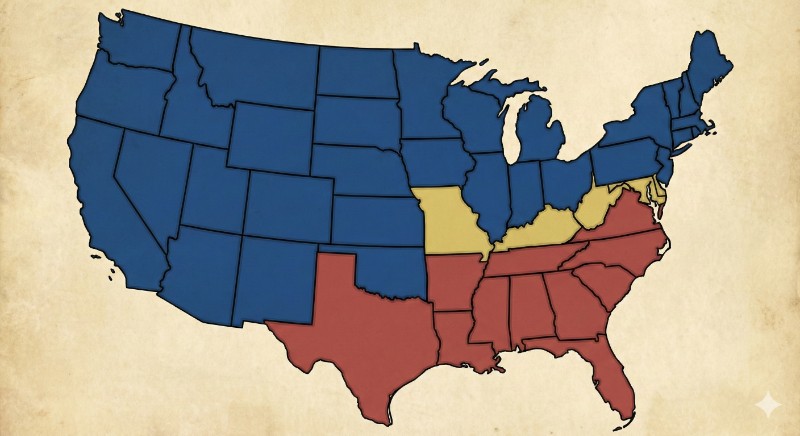
A) By resolving the issue, it allowed parties to focus on nativism.
B) By proving compromise was possible, it strengthened the existing party system.
C) By intensifying sectional divisions, it shattered the national coalitions of the Second Party System.
D) By encouraging national unity, it led to the formation of a single dominant political party.
Correct Answer: C
The text creates a clear link: the failure of attempts like the Kansas-Nebraska Act to reduce conflict over slavery led to the weakening of party loyalties and the emergence of sectional parties. The intensified conflict broke the old system.
A) successfully fostered the emergence of a new national party.
B) was a failed attempt to resolve the issue of slavery in the territories.
C) weakened the Republican Party in the North.
D) calmed the political tensions related to anti-immigrant nativism.
Correct Answer: B
The source explicitly groups the Kansas-Nebraska Act with other 'attempts to resolve the issue of slavery in the territories' that 'ultimately failed to reduce conflict.'